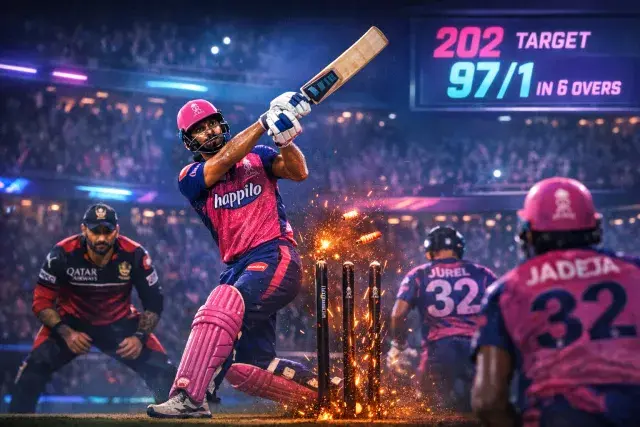

On April 11, 2026, Rajasthan Royals chased down 202 runs against Royal Challengers Bengaluru with six wickets in hand, driven by Vaibhav Sooryavanshi's blistering 78 off 26 balls in the opening overs. This performance extended their unbeaten run to four matches while marking RCB's first loss of the season. The early dominance shifted momentum decisively, exposing vulnerabilities in high-pressure chases within the Indian Premier League.
Explosive Start Reshapes the Chase
Sooryavanshi and Dhruv Jurel forged a 108-run partnership, propelling Rajasthan Royals to 97 for one in the first six overs. Jurel remained unbeaten on 81, while Ravindra Jadeja added an unbeaten 24, allowing the side to reach the target in 18 overs. RCB captain Rajat Patidar pinpointed this powerplay surge as the turning point, stating, “The way their batters, especially Vaibhav, batted in the powerplay, I think that made a huge difference.” Such aggressive openings underscore how early momentum can dismantle even substantial totals in T20 contests.
RCB's Batting Recovery Falls Short
RCB stumbled to 62 for four and 94 for six before recovering to 201 for eight. Patidar anchored the innings with 63 off 40 balls, supported by Venkatesh Iyer's unbeaten 29 off 15 balls, which lifted the score beyond 200. Patidar reflected positively afterward: “I think the way we started in the powerplay, the initial wickets, and from there, 202, I think that’s a positive sign for us. I think there are a lot of learnings from this game.” This resilience highlights patterns in T20 cricket where middle-order repairs often prove insufficient against relentless chasing pressure.
Implications for IPL Season Dynamics
Rajasthan Royals' fourth straight win strengthens their position early in the campaign, demonstrating the value of powerplay aggression in sustaining winning streaks. For RCB, the defeat prompts tactical adjustments, particularly in containing explosive starts that unravel bowling plans. These encounters reveal broader IPL trends: teams mastering the first six overs gain a statistical edge, as historical data shows powerplay run rates above 16 often correlate with higher chase success. Both sides now carry lessons into upcoming fixtures, where such margins define playoff contention.